Citizens United for Humanity

A lobby for the rest of us.

On issue after issue, public opinion has moved and policy has not. That gap isn't a communication problem. It's a structural one. Policy listens to lobbying dollars. So we're building a lobby that answers to people, not the ultra wealthy.

Boycott. Lobby. Reform.

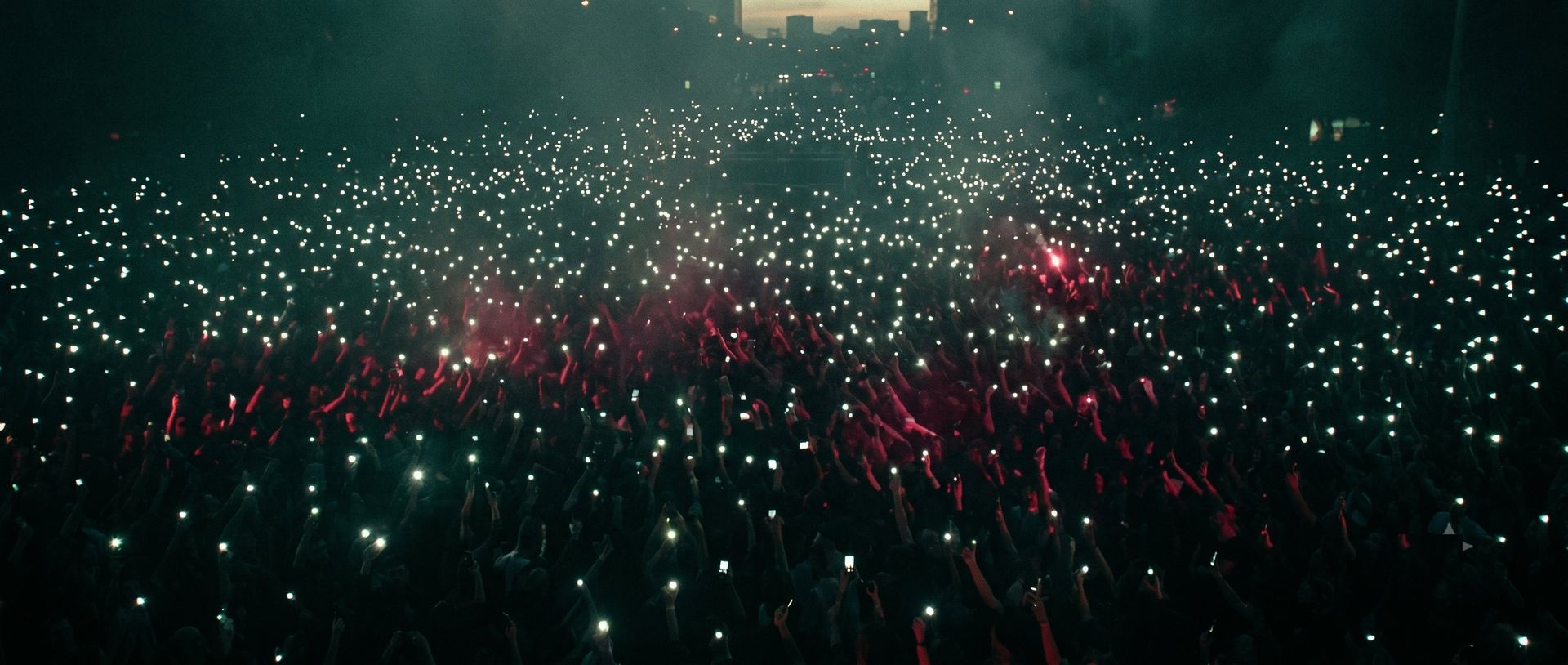
A vast crowd at dusk holding up phone lights
Where boycotts are heading

The evolution was already underway. One step was missing.

ThenThe classic boycott

Withdraw, and wait.

Refusing to buy built moral clarity and real economic pain, and it carried every major campaign of the last century. What it never carried was a specific demand with a defined end.

NowThe organized boycott

Themed, targeted, coordinated.

Story-driven campaigns, sometimes called Boycotts 2.0, already exist and already work. They are nobody's invention, including ours. They still end at withdrawal.

NextBoycott-to-Lobby™

Withdraw, with a demand attached.

The boycott asks the company to publicly support a named bill, verifiable in its quarterly lobbying disclosures, on a 90-day deadline. Comply, and the boycott ends. How it works →

The overlooked truth

You've been funding the machine.

Every subscription, every brand loyalty, every card swipe travels upward into a handful of asset managers who hold a piece of nearly every major company in America, and whose lobbying writes the policy you can't stand.

If one or two percent of a coffee sounds like pocket change, do the aggregation. Billions of purchases a day, pooled for decades into corporate treasuries, fund lobbying operations that cost more per year than most charities raise in ten. Amazon and Meta each spend roughly twenty million dollars a year lobbying Washington, and the other consumer giants are not far behind. Nobody asked which policies you wanted funded. Pocket change, at scale and over time, is a budget of its own, and it is still writing checks to people working against you. Your money is already political. You've just never had an instrument for steering it.

That's the instrument we're building.

What this means for you as a consumer: Part of what you spend currently funds lobbying you never approved. Together, we turn that spending into leverage to control where those dollars go. The result is a direct channel into policymaking that bypasses the election cycle.

Who we are

Anti-war.Anti-oppression.Anti-corruption.

We don't define ourselves against any people or faith. We stand with the oppressed, whoever they are and wherever they are. The Humane Lobby will exist for as long as people are systematically oppressed or enslaved. No exceptions. No borders.

Change requires three things working together: information, mobilization, and lobbying. Movements have built real strength on the first two. The third has always belonged to corporations and the ultra wealthy, locked away as a B2B tool. Our mission is to turn lobbying into a B2C instrument: a tool ordinary citizens can wield, together. Nobody has organized this front. It's wide open. It's ours.

We fight to make public sentiment set policy. But we are not built on sentiment.

We are built for strategy: pragmatic, outside-the-box pressure, applied where it actually moves power. And when we choose our projects, whether war crimes abroad, corruption at home, or civil-rights enforcement, we ground every demand in international law, ICC and ICJ positions, UN resolutions, and recognized borders. Never in mood.

That sentence is our job description. We are the strategists behind the whole thing: the ones who study the target, size the demand, time the campaign, and decide when it ends. And if the pilot succeeds, we intend to be methodic, and frankly evangelical, about scaling the framework. The same way social media monetized every social aspect of our lives, we intend to capitalize on our consumption habits and choices, this time for the public's own benefit.
The receipts

You did the work. The system didn't listen.

For two years the public did everything democracy is supposed to ask: learned, marched, donated, voted, and changed the national conversation. The weapons kept shipping anyway. The explanation is arithmetic, not apathy. Federal lobbying has run past four billion dollars every year since 2022, and corporations spend about 34 lobbying dollars for every one spent by public-interest groups and unions combined. When one side outspends the other 34 to 1 inside the only channel that writes law, outcomes stop tracking opinion. Sentiment doesn't write policy. Lobbying dollars do.

The starkest recent example is Palestine, where US public sentiment has moved across an entire generation while policy has not moved at all. The polls that document that divorce, front by front, are on our Projects & Campaigns page.

Where things stand

Four fronts.
Three near‑won.
One wide open.

Over the past two years, the pro-Palestine community pushed three of these four fronts to or past critical mass, an extraordinary amount of unpaid, unthanked work. One front has never even been started.

Critical mass is not a finish line. The won fronts need constant work to hold their gains, and nobody should let up. But the greater urgency now is the missing piece, not squeezing more out of what has already been won.

Awareness and reach

Critical mass reached

Independent journalism and decentralized media did the job, even under platform suppression. The story is out, and it is not going back.

Sympathy for Palestine

Critical mass reached

Three quarters of Gen Z, Democrats, and young American Jews are pro-Palestine. Work remains elsewhere, but the majority has moved.

Voting out AIPAC-backed candidates

In progress

Real wins have emerged, but not yet sweeping ones. This front will take 6 to 24 months to prove itself at scale.

Influencing policy through consumer spending

Not started

Never started. This is where we work.

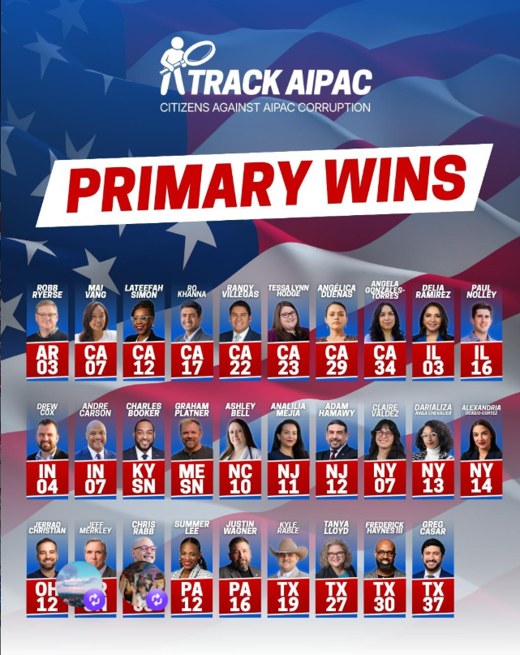
Track AIPAC Primary Wins: candidates AIPAC opposed winning their primaries
The slow front is already moving

The ballot box is starting to answer.

In the 2026 primaries, a wave of candidates AIPAC spent millions against won anyway, and in several races that spending backfired, lifting the very people it set out to stop. This front is slow by design, and it is already turning. Money still buys the airtime. It no longer reliably buys the seat.

No organization, anywhere, has ever methodically combined the machinery of Citizens United with organized consumer pressure to pull policy toward public opinion and the public good. It has simply never been tried.This lane is empty. We're taking it.

The test

A framework untested is a fantasy.

So we are not launching ten campaigns. We are launching one, and staking the model on it. The pilot had to satisfy four criteria we fixed in advance:

PUBLIC INTEREST

Aligned with the public interest, so the vast majority read the demand as fair.

PROTECTION

Leads, directly or indirectly, to the protection of the oppressed.

A NAMED BILL

Explicitly asks a corporation or organization to support or lobby for a specific bill or policy.

VERIFIABLE

Verifiable, in public records, by anyone.

A watermelon tourmaline ring in a green velvet box

One campaign satisfies all four: Freedom is Forever™, our proof of concept. A diamond campaign aimed at the industry's certification loophole, offered to the generation that is just beginning to marry, and will keep marrying in waves for the next decade and a half. The rest of the slate, from The Starbucks Demand to the Corporate Lobby Map, waits its turn behind the proof.

What we actually do

One specialty, executed end to end.

We are organizers and strategists. We do not lobby, we do not run for office, and we do not mobilize crowds ourselves. We see the whole board, then run one campaign at a time.

Step one

We scan, prioritize, and commit.

We track cases of oppression and atrocity globally, score them by urgency, winnability, and the strength of the money trail, and select the next cause. For each one we design a quarterly campaign cadence that can run for one to two years, with multiple lobbying pressure points, until the oppression stops or the strategy is proven wrong. Causes can be foreign or domestic: war crimes abroad, or corruption and severe DEI violations at home, qualify the moment a money trail and a named bill exist.

Step two

We design the campaign.

Target selection, demand design, scenario testing, the public scoreboard, and the exit. Citizens United, run in reverse, is our operating environment. Boycott-to-Lobby™ is our tool.

Step three

We plug into established networks.

Mobilization organizations and high-reach creators carry the campaign to the public. They are a cornerstone of this model, and we work through them rather than pretending to replace them.

Step four

We escalate, lawfully.

Coordinated petitions, mass email drives to targets and officeholders, and shareholder-facing pressure. Escalation tactics inside a campaign, never an identity.

Step five

We publish everything.

The playbook, the data, and the outcome, win or lose, so the model can be copied, criticized, and improved by anyone. That is how an idea becomes infrastructure.

Built with a network

None of this works as a solo act.

A campaign is only as loud as the network behind it. Five kinds of partners make the machine run, and we sit at the center, conducting.

The Humane Lobby Creators Mobilizationpartners Legalcounsel Researchers Advocacygroups

Creators
The content arm. High-reach voices who carry each campaign's story.

Mobilization partners
Established networks that know how to move crowds. We work through them.

Advocacy groups
Allies in policy and press, including officeholders who flag bills where sentiment runs one way and policy the other.

Researchers
Scholars with open access to our campaign data, to study the model or prove it wrong.

Legal counsel
Every claim and every demand letter reviewed before it ships. We are in active conversations to establish each of these partnerships, and will announce them as they are signed.

If you belong in one of these circles, this is your door.

See the projects & campaigns → Join us →